On September 23, 2026, D. Grigoriev, KOMIB CEO, has held a roundtable titled “Priority Areas for the Development of Public‑Private Partnership in Implementing State Policy in the Field of International Information Security and Promoting Domestic Information Security Products and Services in Foreign Markets” as part of the 20th anniversary International Forum “Partnership of State Authorities, Civil Society and the Business Community in Ensuring International Information Security,” which is organized annually by the National Association for International Information Security.

The event was held in the format of a panel discussion, in which representatives of Russian cybersecurity companies took part. LLC "Angara Technologies Group", JSC "Unlimited Production" (developer eXpress), LLC "Security Code", JSC "SecurIT" (Zecurion), LLC "T8", LLC "Techdivision", JSC "Elvis-Plus", etc.; head of the consulting company Leonardo Analytics, representatives of large industrial holdings -customers of information security solutions: Severstal PJSC and others; digital attaches, editor–in-chief of ITRussia, representative of the Regional Public Center for Internet Technologies, independent experts, co-founder of the Nepal ICT Foundation, members of the foreign scientific community and diplomatic missions in Moscow.

In his opening remarks, D. Grigoriev noted that if 20 years ago, when this Forum was first held, the focus was on establishing the basic rules of the game and finding common ground with the West, today the agenda includes technological sovereignty and the construction of a security architecture for the Global Majority. Russian companies have passed an unprecedented test of resilience, withstood the pressure of sanctions, and learned to ensure the information security of critical infrastructure in the context of the total shutdown of Western vendors and the cessation of their support. By developing foreign economic activity, the state sets the direction and opens diplomatic “corridors,” while businesses create technologies and assume commercial risks. D. Grigoriev suggested that the discussion participants consider how to convert the experience accumulated by Russian companies into a successful export product; how to “tune” PPP mechanisms to promote Russian solutions in the markets of the Global South, BRICS+, the SCO, etc.
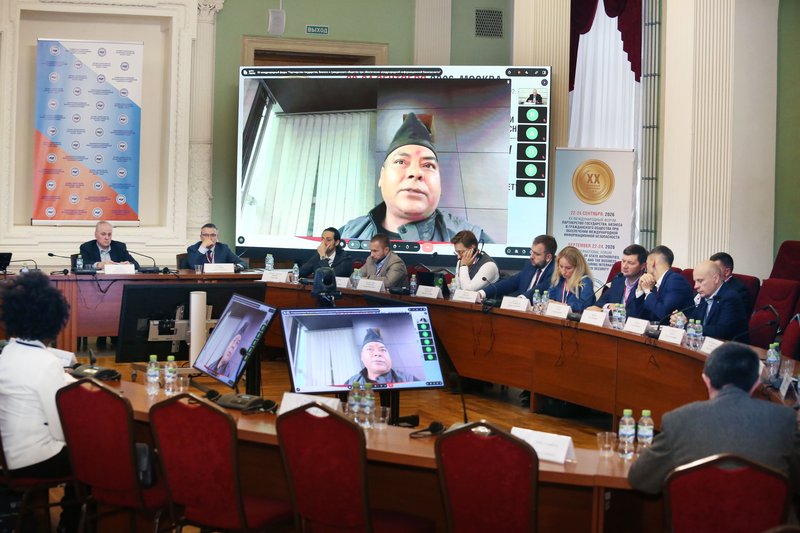
The discussion participants agreed that Russia’s experience in ensuring information security under sanctions is forming a ready‑made export standard for sovereign cyber defense. Russian vendors declare that there are no risks of external shutdown, license revocation, or remote blocking of their information security products. Strategies for promoting Russian information security solutions should be based not on attempts to compete in Western‑oriented ecosystems, but on offering autonomous, architecturally flexible, and externally isolated security circuits that include comprehensive expertise, the export of competencies, and a personnel training system based on the existing system of interaction with universities.
The participants of the Roundtable noted that exporting Russian cybersecurity is not just a matter of profit for specific companies, but also a state political goal. Representatives of Russian cybersecurity companies have highlighted the need for an authoritative independent coordinator of foreign economic activity, noted the urgent need to develop domestic consulting, and emphasized the necessity of establishing Russian trust centers abroad to support the export of IT solutions.
Summing up the interesting discussion, D. Grigoriev, in particular, has emphasized that the main advantage of Russian exporters is their experience in successfully countering unprecedented sanctions. Russian cybersecurity vendors offer not just technologies, but survival proven in practice. The state and business must act as a single unit: diplomacy opens doors, while PPP models help to stay in the market through localization and staff training.
The outcomes of the discussion will be summarized and communicated to the leadership of the interested government agencies.